
 Image 1 of 3
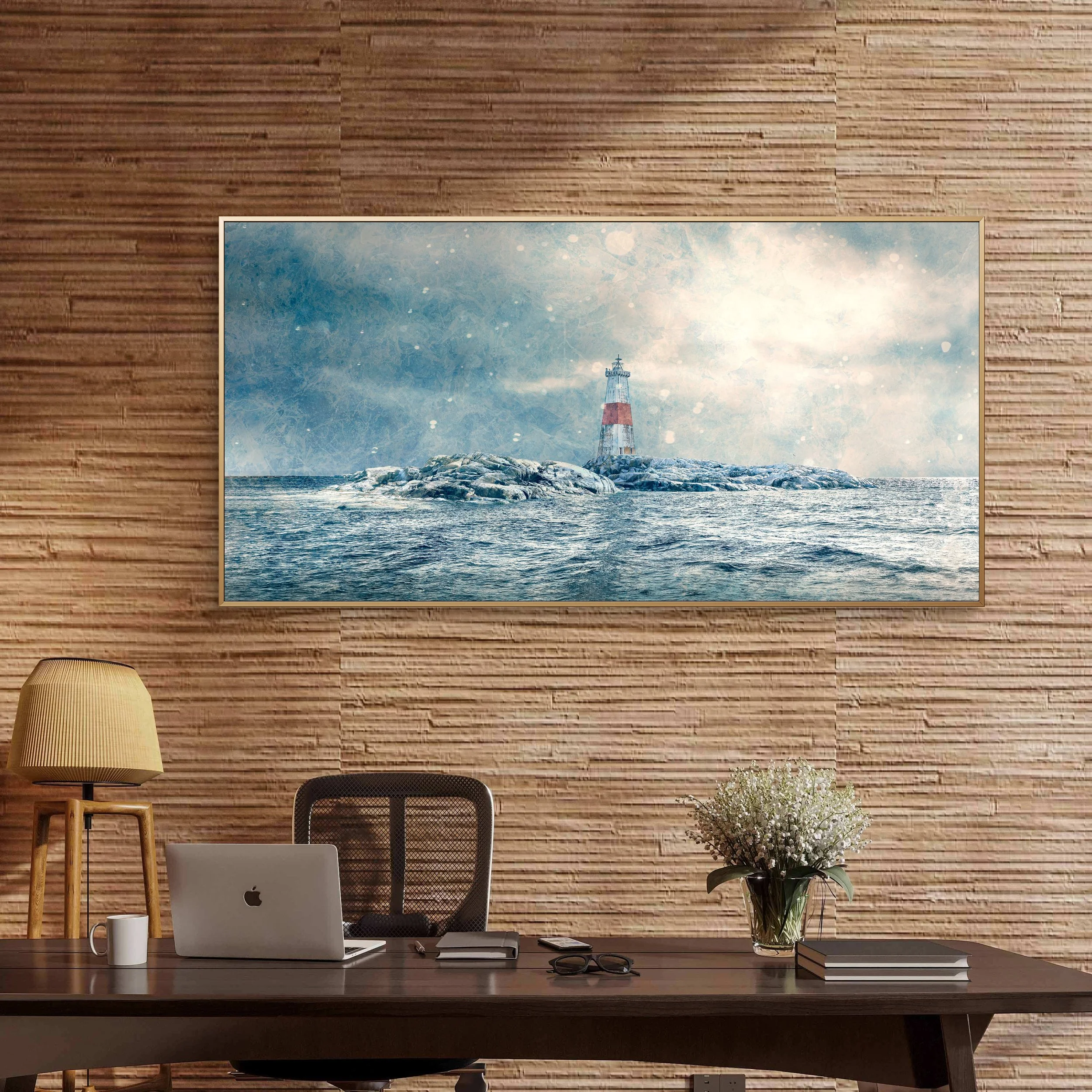 Image 2 of 3
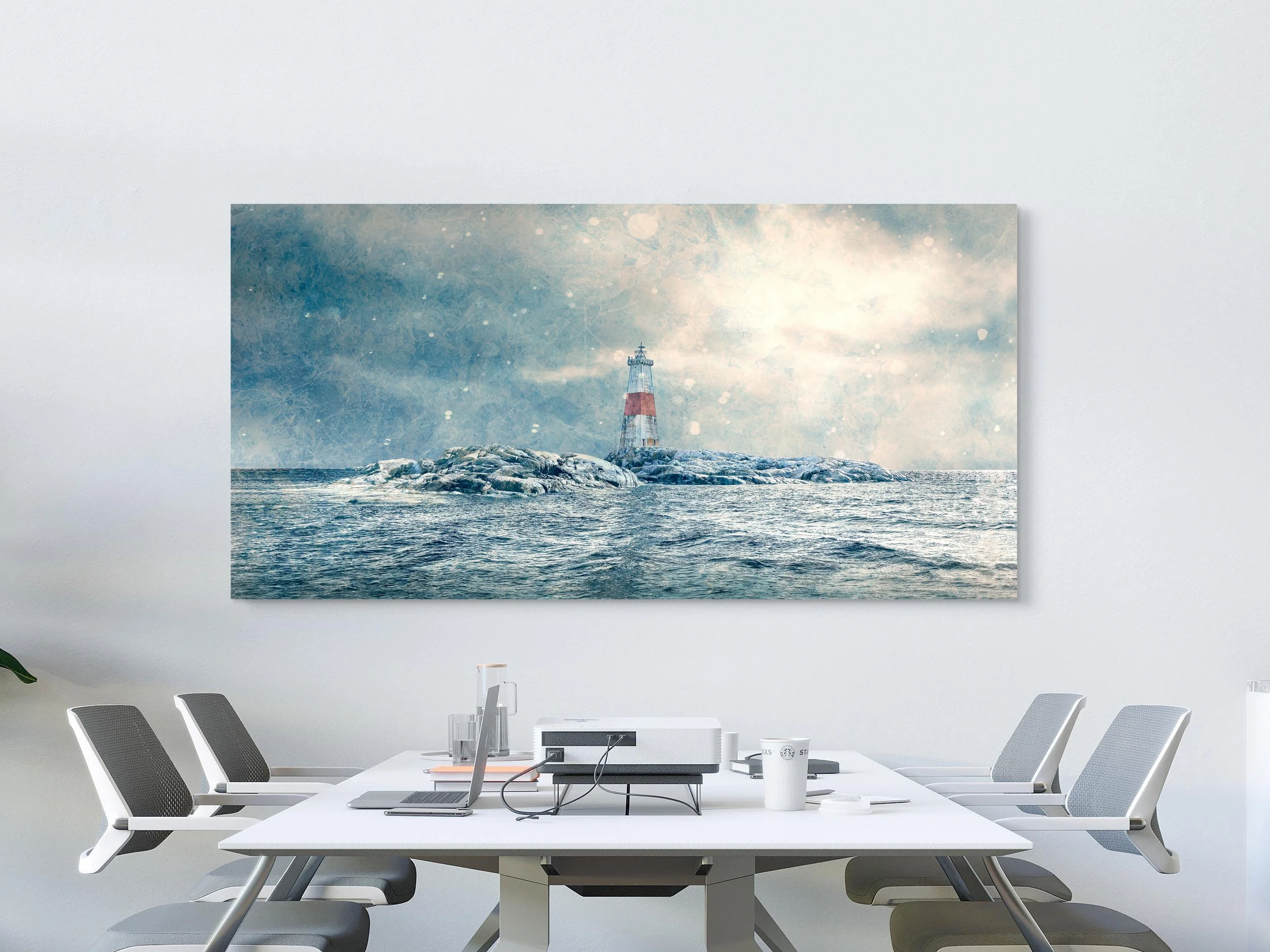 Image 3 of 3
This artwork is a more poetic, layered seascape crafted from photographs and textured structures, showing Sundharun Island wrapped in its winter coat.
Sundharun sits on a rugged, open-sea skerry just off Jussarö (about 4 km south), right in the middle of the Gulf of Finland’s wilder waters. The lighthouse here – officially called Jussarö Lighthouse but often known as Sundharun – was Finland’s very first to be designed and built as fully automated from the start. Lit for the first time in 1922, it replaced the older Jussarö light (from 1891), which had a lousy spot thanks to magnetic disturbances messing with ships’ compasses.
What makes this tower special? It’s a poured-concrete beast – one of the only ones like it in Finland. No other beacons in the country were cast quite this way. Inside you’ll find rooms for storing gas cylinders (originally acetylene for the light) and a simple space for temporary stays during maintenance. The original lens system got swapped out ages ago for a small, modern plastic-shelled beacon.
The whole structure is in surprisingly great shape considering the brutal sea conditions it faces. Sundharun is part of the layered, historic lighthouse group out in the Tammisaari outer archipelago – it marks an important step in Finnish lighthouse tech history and stands as a solid example of early 20th-century concrete maritime architecture.
This artwork is a more poetic, layered seascape crafted from photographs and textured structures, showing Sundharun Island wrapped in its winter coat.
Sundharun sits on a rugged, open-sea skerry just off Jussarö (about 4 km south), right in the middle of the Gulf of Finland’s wilder waters. The lighthouse here – officially called Jussarö Lighthouse but often known as Sundharun – was Finland’s very first to be designed and built as fully automated from the start. Lit for the first time in 1922, it replaced the older Jussarö light (from 1891), which had a lousy spot thanks to magnetic disturbances messing with ships’ compasses.
What makes this tower special? It’s a poured-concrete beast – one of the only ones like it in Finland. No other beacons in the country were cast quite this way. Inside you’ll find rooms for storing gas cylinders (originally acetylene for the light) and a simple space for temporary stays during maintenance. The original lens system got swapped out ages ago for a small, modern plastic-shelled beacon.
The whole structure is in surprisingly great shape considering the brutal sea conditions it faces. Sundharun is part of the layered, historic lighthouse group out in the Tammisaari outer archipelago – it marks an important step in Finnish lighthouse tech history and stands as a solid example of early 20th-century concrete maritime architecture.